Chapter 3: Using Analytics to Work Towards Goals
People who organize will need to set some goals for community outreach. One framework that organizers can use is SMART Goals.. SMART is an acronym for goal setting that stands for specific, measurable, achievable, relevant, and time-bound.

Some examples of goals are as follows:
-
By October, we will have 30 new interested volunteers fill out the interest form so that we can grow our community organization.
-
In two weeks, we will call 10 people in our database to invite them to an upcoming event so that we can increase our attendance.
-
By Friday, we will work with 3 volunteers to move them through the ladder of engagement to more deeply invest them in our work.
-
In three months, we will host 5 events with 50% attendance for the people who registered, showing that we are creating events that engage our community.
In Airtable, the database template has built out a dashboard to help measure progress towards goals:
The New Member Sign Ups table shows users who have been added to the database in the last day, week, month, and all-time.
The Event Summary Graph shows the attendance for different events, along with who has cancelled or attended. The database marks people as scheduled by default if they sign up for the event.
The Ladder and Event View shows the ladder of engagement steps and event sign-up details for each volunteer.
The ladder change log reports any volunteers who have been recently moved to a new ladder of engagement step.
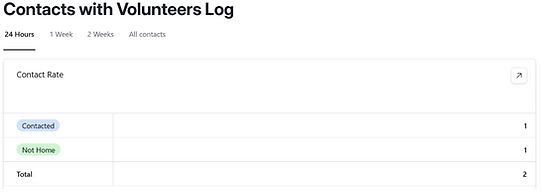
The Contacts with Volunteers Log reports people who report in the call log form that they have reached out to another person in the database, and the result of that call.
These different analytics update automatically as organizers use the database and should provide a useful starting point for measuring progress towards goals.